On The Mend · Attachment
Anxious Attachment After a Breakup: The Survival Guide

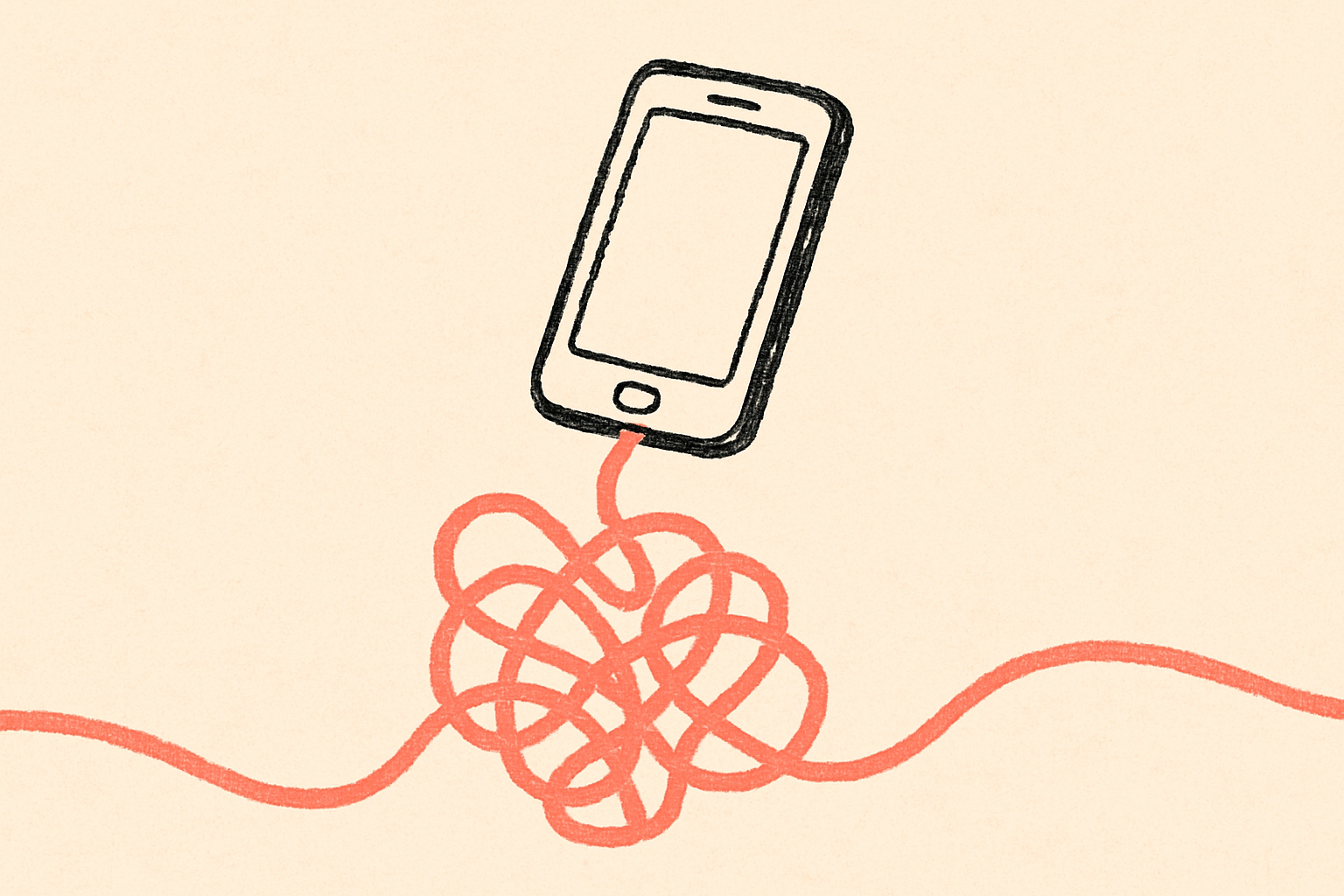
Anxious attachment after a breakup feels less like sadness and more like withdrawal from a drug. The protest phase kicks in — drafting paragraphs, refreshing their Instagram, the 3am spiral where your brain insists one more text will fix everything. It will not. This guide explains what is actually happening in your nervous system, why your impulses are predictable, and how to ride out the worst stretch without burning down the version of you that survives this. No clinical lectures. No "just love yourself." Real tactics.
What anxious attachment actually is
The term comes from a specific research lineage. John Bowlby observed in the 1950s that infants separated from caregivers cycled through protest, despair, and detachment. Mary Ainsworth's Strange Situation studies in the 1970s sorted those infants into secure, anxious-ambivalent, and avoidant patterns based on how they reacted to a caregiver leaving and returning. Then in 1987, Cindy Hazan and Phillip Shaver took that framework and applied it to adult romantic love. Their finding, repeated in study after study since, is that adults form pair bonds using the same neural machinery that infants use to bond with caregivers.
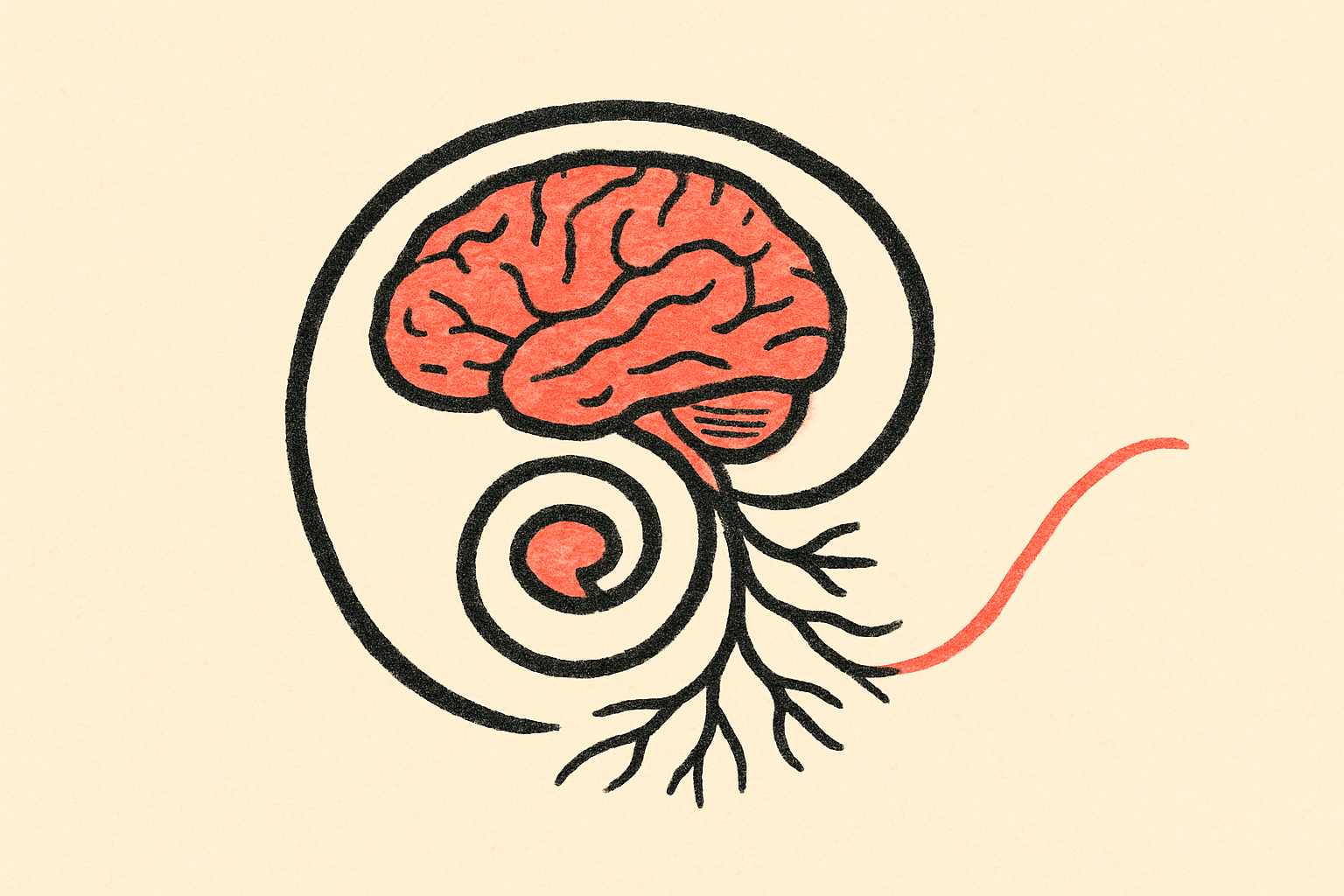
Anxious attachment in adults shows up as hyperactivation. Your attachment system, the part of you that monitors closeness to a primary partner, is set to high gain. When the bond is threatened — a slow reply, a vague text, an actual breakup — your system floods you with alarm signals to close the distance. Reach out. Apologize. Fix it. Now.
This is not weakness. It is a wiring difference, partly heritable and partly shaped by early caregiving where love felt inconsistent or conditional. The reaching-out behavior worked when you were three. It does not work at thirty-three.
The protest phase
After a breakup, the anxiously attached nervous system does not register the ending. It registers a separation, which it treats as solvable. This is what attachment researchers call protest behavior, and it has a recognizable shape.
- Drafting and redrafting long messages you may or may not send.
- Showing up where you might "accidentally" run into them.
- Calling from a blocked number to hear their voice.
- Replaying the last conversation in your head looking for the magic sentence that would have changed the outcome.
- Posting on social media calibrated for them to see.
- Bargaining with a friend to text them on your behalf.
- Reaching out to their family or close friends to "stay connected."
If you recognize yourself in this list, you are not crazy and you are not uniquely broken. You are doing exactly what an evolved attachment system does when it loses its primary figure. Naming the behavior as protest is the first move, because protest is supposed to be self-limiting. In Bowlby's framework, it gives way to despair and then to reorganization. It only sticks if you keep feeding it with contact.
Why "they were avoidant" is half the story
Anxious-avoidant pairings are one of the most well-documented dynamics in adult attachment research, and yes, your ex's avoidance probably made things harder. The pursuer-distancer pattern is real. The closer you got, the more they pulled back. The more they pulled back, the harder you chased. Sue Johnson, the founder of Emotionally Focused Therapy, calls this the demon dialogue, and her clinical work suggests it is the single most common pattern that destroys otherwise viable relationships.
But here is the part most TikTok explainers skip. The pattern only takes two people to run. Pinning the entire breakup on their avoidance gives you a clean villain and a reason to keep ruminating on them instead of on what your own system was doing. Anxious attachment does not just react to avoidant partners. It often selects them, because the intermittent reinforcement of an inconsistent partner feels familiar and activating. The high is real. So is the cost.
Acknowledging your half is not self-flagellation. It is the move that lets you stop being a hostage to the next person who triggers the same loop.
The 3am spiral and what is actually happening
Late-night intrusive thoughts about an ex are not a character flaw. They are a predictable interaction between sleep cycles, cortisol, and the attachment system.
Around 3 to 5am, cortisol begins to rise to prepare you for waking. If your nervous system is already in a state of separation alarm, that cortisol bump lands on a brain that has nothing to do except think about the threat. With no distractions, no work, no friends, your default-mode network turns inward and the most emotionally salient material wins. Right now, that is them.
The spiral often looks like this:
- Wake up at 3:47am for no reason.
- Reach for the phone "just to check the time."
- Open a thread. Reread an old message. Notice a detail you missed.
- Decide that detail proves they still care, or proves they never did.
- Draft a message. Maybe send it. Maybe not. Either way, sleep is gone.
Knowing the mechanism does not stop the wave. But it does let you stop interpreting the wave as proof of anything. A 3am thought is a cortisol artifact wearing a costume. It is not a message from your true self.
Concrete tactics for nervous-system regulation
The work of an anxiously attached person in early no contact is not to feel less. It is to feel without acting. Every tactic below is in service of that.
Physiological first
The attachment system speaks the language of the body before it speaks the language of words. Regulate the body and the thoughts soften.
- Long exhales. Inhale four seconds, exhale eight. Repeat for two minutes. This drops you out of sympathetic activation faster than any cognitive reframe.
- Cold water on the face. Triggers the mammalian dive reflex and lowers heart rate. Cheap, fast, embarrassing if anyone walks in.
- Walk outside within 30 minutes of waking. Morning light anchors your circadian rhythm and reduces the 3am wake-ups within about a week.
- Eat protein before noon. Low blood sugar mimics emotional dysregulation. You will think it is heartbreak. Sometimes it is a bagel.
- Lift something heavy twice a week. Anxious activation needs somewhere to go. Cardio works. Strength work seems to work better.
Behavioral guardrails
You will not out-discipline a hyperactivated attachment system. You will out-architect it.
- Delete the thread. Not archive. Delete.
- Block on every platform, including the ones where you "would never check anyway." You would.
- Move their contact to a generic name like "Do Not Text" so the muscle-memory autocomplete in your phone stops surfacing them.
- Tell two friends you are doing no contact and give them permission to call you out.
- Put your phone in another room from 10pm to 8am for the first thirty days.
Cognitive work
Anxious attachment runs a story that says reaching out will resolve the pain. Reaching out resolves the pain for about twenty minutes, then doubles it. The cognitive work is to interrupt the story before the action.
- Write the text. Do not send it. Drafting often discharges enough of the urge that you do not need to send.
- Set a 48-hour rule. Any message you want to send to them, sit on for 48 hours. If you still want to send it on hour 49, you probably will not, because by then the wave has passed.
- Make a "reasons it ended" list. Specific. Concrete. Read it when the idealization hits.
A scenario you will recognize
It is Sunday at 7pm. You have made it nine days. You feel almost okay. Then a song comes on, or a friend mentions a place you used to go, and the wave hits. Within four minutes you are on their Instagram. Within seven, you are looking at the profile of someone you suspect they might be talking to. Within twelve, you are drafting a message that starts "I know I said I wouldn't reach out, but."
This is the moment. Not the moment when you send it. The moment when the wave starts. The wave will pass in 20 to 90 minutes if you do not feed it. If you feed it by sending, refreshing, or scrolling, it resets and starts again. The whole game is to not feed the wave for an hour and a half.
Walk. Cold water. Call the friend who knows. Do anything except open the app.
When to get more help
If the intrusive thoughts feel constant rather than wavelike, if you are not eating or sleeping for more than a week, if you are having thoughts of hurting yourself, this is not an attachment-style problem to wait out. It is a clinical situation. Talk to a doctor or therapist. The post you read about Bowlby is not a substitute for someone trained to help you. EFT-trained therapists (the Sue Johnson lineage) and attachment-informed clinicians are particularly good for this stuff. The International Centre for Excellence in Emotionally Focused Therapy maintains a directory.
How Chaz fits in
This is the part where the app comes in, briefly and without a sales pitch. Chaz is a free iPhone app built around no contact for exactly the moment described above — the wave at minute four when you are about to open the app. It tracks the streak, has a voice agent you can yell at instead of texting them, and has attachment-style tracking baked in so you can actually see your patterns over time. It will not love you. It will not replace a friend or a therapist. But at 3am when nobody is awake and you need somewhere for the protest to go that is not their inbox, that is what it is for.
The reorganization phase
The protest phase is loud. The phase after it is quiet and often more disorienting, because it does not feel like grief. It feels like nothing. You wake up one morning around week six or eight and notice you did not think about them first. That is not a sign you did not love them. It is the attachment system finally unhooking. From there, anxious attachment can shift. Earned secure attachment is a real outcome, documented in the longitudinal work that follows up on people years after major attachment disruptions. It is built one un-sent text at a time.
The version of you on the other side of this is not over them, exactly. She just stopped organizing her life around a person who is no longer in it. That is the goal. Not closure. Reorganization.