On The Mend · No-Contact Rule
Why No Contact Feels Worse Before It Feels Better

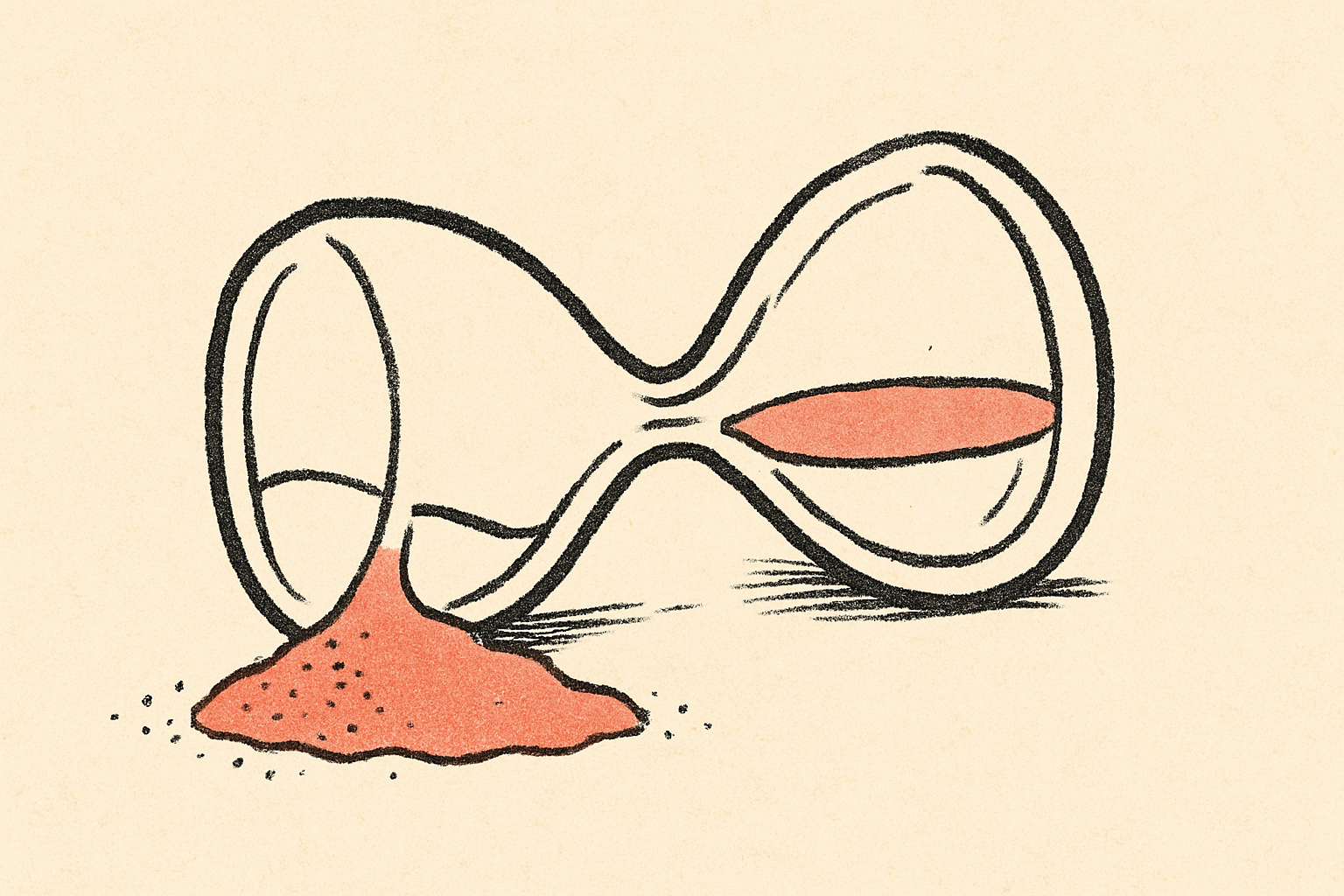
Going no contact almost always feels worse in the first two weeks than the breakup itself did. The reason is neurological. Your brain has been using contact, even painful or unsatisfying contact, as a numbing agent. When you cut the supply, you're not in pain because the rule is broken. You're in pain because the rule is working, and you're now feeling the loss that was already there. Helen Fisher's research on romantic rejection shows that this phase looks neurologically like substance withdrawal, with the same craving spikes, intrusive thoughts, and physical symptoms. The discomfort is the curve. The curve peaks and then falls.
The thing nobody warns you about
Day three of no contact is often the worst day of your life. Not because day three is harder than the breakup. Because day three is the breakup, finally felt in full, with no anesthetic.
While you were still in contact, even bad contact, you had a low-dose drip of dopamine keeping the worst of the loss at bay. A text reply, a story view, a "what is she up to" check, a "he liked my photo" notification. Each one a small hit that kept your nervous system from fully registering that the relationship was over.
The first week of no contact removes the drip. The grief that's been there the whole time floods in. People interpret this as "the rule is making things worse" and quit on day five.
That is the moment the rule is starting to work.
The neuroscience, briefly
Helen Fisher, working at Rutgers and the Kinsey Institute, ran fMRI studies of people who had recently been romantically rejected and were still in love with the person who rejected them. She and her collaborators found that when subjects looked at photos of their ex, brain regions involved in reward (the ventral tegmental area), motivation, and craving lit up. The same circuitry implicated in cocaine and opioid addiction.
Romantic love, in her framing, is not primarily an emotion. It is a motivation system. Your brain wants the reward back. When it can't have it, the system doesn't shut off. It escalates. Intrusive thoughts, planning behavior, sometimes obsession.
The corollary, which is the relevant part here: every time you got a small reinforcement (a text, a story view, a glance), the system got just enough input to keep running. The withdrawal can't begin until the input stops.
This is why no contact, not partial contact, is the intervention. Partial contact is variable reinforcement, which behavioral research dating back to B.F. Skinner shows is the most addictive schedule there is. Slot machines work this way. So does occasional warmth from an unreliable ex.
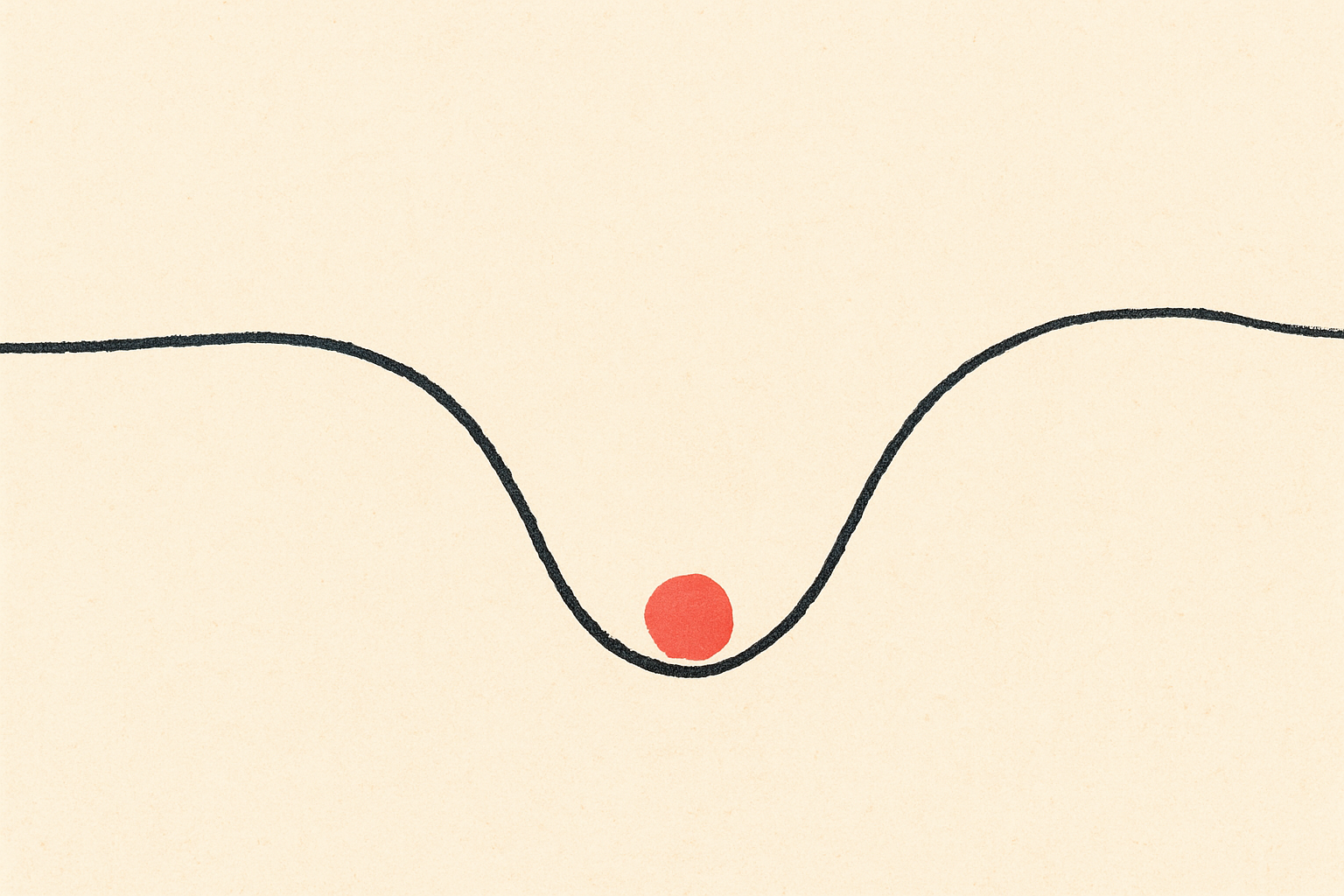
What the curve actually looks like
This is a rough composite. Your mileage will vary based on attachment style, relationship length, and how much numbing you'd been doing.
- Days 1-3. Adrenaline still running. You might feel weirdly okay. People sometimes mistake this for "I'm fine" and conclude they don't need the rule. The fall is coming.
- Days 4-10. The crash. Crying jags, intrusive thoughts, no appetite or all appetite, real physical chest pain, drafted texts you don't send. Sleep is bad. You will not believe this gets better. This is peak withdrawal.
- Days 11-21. The fog. Less acute, more dissociated. You're functioning. You're at work but you're glassy. You're checking their social media too much, or finding workarounds for whatever you blocked. The pain isn't sharp; it's just everywhere.
- Days 22-35. The first lift. Something genuinely shifts. A song that used to wreck you doesn't. You go an afternoon without thinking about them. You laugh, unperformed. You also probably panic the first time this happens, because you'll worry you don't love them anymore.
- Days 36+. Slow reorganization. The thoughts come less often. They sting less. You start having opinions and routines that are yours. By day 60 the relationship is something that happened to you, not the shape of your life.
Bowlby's protest-despair-reorganization arc maps roughly onto this, with protest in the first month, despair sliding through the second, and reorganization across the third.
Why the early days hurt more than the breakup
This is the question people actually have. It's not "is no contact hard." Everyone knows no contact is hard. The question is, why does it hurt more than the actual breakup did.
Three reasons.
- You're no longer using contact as a painkiller. During the breakup itself, you were still talking to them. The grief was real but it was muted by the still-active connection. No contact removes the painkiller. The grief shows up full strength.
- The finality lands. Breakups are usually a process, not an event. The conversation where you formally split is one step in a chain. The moment the silence becomes real, that's often when "this is actually over" hits the body.
- You're now feeling the cumulative loss, not just the immediate one. Not just the loss of them. The loss of the version of your life that had them in it. The loss of the future you'd been picturing. The loss of the routines, the shared friends, the shared apartment in your mind. All of it lands at once when the contact stops shielding you from it.
That's a lot of loss to feel at the same time. It is genuinely harder than the breakup. It is also the only path through.
How to interpret the pain correctly
The single most important reframe in the first two weeks of no contact: the pain is not evidence that the rule is wrong. The pain is evidence that the rule is working.
Reframes that help:
- "I am in withdrawal" instead of "I am falling apart." Withdrawal is a known curve. It peaks and falls. Falling apart is undefined.
- "This is what grieving feels like in the body" instead of "something is wrong with me."
- "The fact that I want to text proves how strong the loop is" instead of "the fact that I want to text means I should."
- "I am surviving day three" instead of "I have to survive 27 more days."
Bring the time horizon down. You are not getting through 30 days. You are getting through the next hour. That's all.
A scenario
It's day 6, 2:14am. You wake up from a dream where they were back. Your chest physically hurts. Not metaphorically. Actually hurts, in the sternum, in a band across the upper chest. (This is real, and it has a clinical correlate in takotsubo cardiomyopathy; see physical symptoms of heartbreak.)
You sit up. The thought "this is unbearable" arrives fully formed. The phone is in your hand. The text is already drafted. "I had a dream and I can't sleep and I just."
You put the phone down. You get up. You drink water. You walk around your apartment for four minutes. You voice memo something incoherent into your phone, or yell at Chaz, or call the one friend on your designated list. Twenty minutes later, the worst of the spike is gone. You go back to bed.
The next morning the pain is still there but it's smaller. By day eight the 2am wakeups stop happening every night. By day fifteen they happen once a week. By day thirty they're rare.
That whole arc started with not sending the text on day six. The window was twenty minutes. The decision was made in those twenty minutes.
What helps, specifically
The most useful interventions in the first two weeks are not the ones that try to make you feel better. They are the ones that get you through the spike intact.
- Movement. Walk, run, swim, lift, anything that moves the cortisol through your body and doesn't require thinking. Five minutes counts.
- Externalize, don't internalize. Voice memos, journaling, yelling at an AI, calling a friend. The urge needs a target. Internalizing it (sitting alone in bed thinking) makes it worse.
- Lower the bar. The goal is not "feel good today." The goal is "did not text him today." Anything more is a bonus.
- Sleep hygiene. Phone out of the bedroom if you can. The 2am spikes are real and they are dramatically worse if the phone is on your nightstand.
- One human a day. Even briefly. A coffee, a text, a walk. Isolation makes the curve worse.
- A visible streak. Calendar, app, sticky note. Something that gives the silence a shape you can see.
What doesn't help much: re-reading the breakup conversation, listening to the playlist, looking at the photos. Those feel like grief work but they're just feeding the loop.
When the pain is the wrong kind
Most early no-contact pain is normal withdrawal. But there are signs the pain is moving past grief into clinical territory and needs professional support.
- You can't get out of bed for multiple days in a row.
- You're not eating or drinking enough to function.
- You're using substances to numb in escalating amounts.
- You're having thoughts of harming yourself.
- You're functionally unable to work or care for dependents.
Breakup grief is intense and survivable. Clinical depression triggered by a breakup is a different condition that needs different support. See breakup depression vs clinical depression. If any of the above are showing up, please reach out to a clinician, your primary care doctor, or a crisis line. The no-contact rule is one tool. It is not the whole intervention.
How Chaz catches the 2am
The single highest-risk window for breaking no contact is between 11pm and 3am, when your defenses are down, the apartment is quiet, and there is no one awake.
Chaz is built for that window. The streak counter gives the night something to lose. The AI voice agent gives the urge a target other than his phone. The journal catches what you said so that on day twenty you can read what you almost sent on day six and feel the distance.
Free, iPhone only. The tagline is the entire pitch: don't text him, talk to Chaz.
The reframe that gets you through
You are not falling apart. You are in withdrawal. Withdrawal peaks and falls. The peak is days four to ten. The fall starts after that. By day thirty you will be a noticeably different person than you are right now, and you will not get there by softening the rule.
The pain in your chest right now is the price of admission to the version of you who is okay again. It is not pleasant. It is also not optional. It is also not permanent.
Survive the next hour. Then the next one. The rest of it adds up on its own.