On The Mend · Healing
The Physical Symptoms of Heartbreak (And Why They're Real)

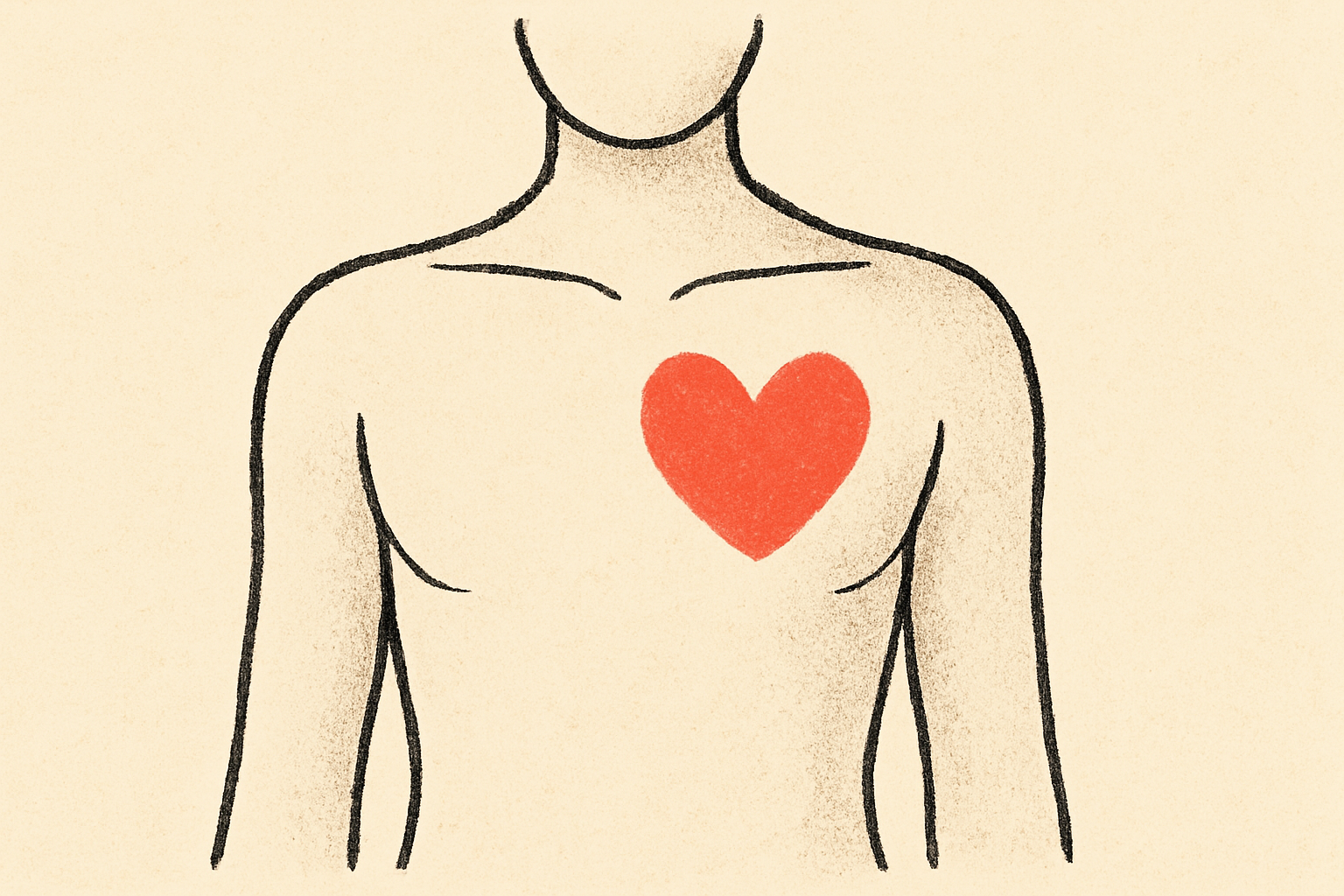
Heartbreak hurts physically. Your chest aches, your stomach is wrecked, you can't sleep, your appetite is gone or weaponized, your muscles feel heavy, and you keep getting sick. None of this is in your head. The body responds to emotional loss the way it responds to physical injury, with the same brain regions, similar stress hormones, and in rare cases an actual cardiac event known as broken heart syndrome. Here's what's happening physiologically, why it matters, and what helps.
Social pain is real pain, neurologically
Naomi Eisenberger's research at UCLA has shown that social pain — rejection, exclusion, loss of important relationships — activates many of the same brain regions involved in physical pain. The dorsal anterior cingulate cortex and anterior insula light up when people are physically hurt and also when they're excluded socially. In some studies, common pain relievers have even shown a modest dampening effect on social pain.
This is the neuroscience answer to anyone who's told you "it's just a breakup, get over it." The brain doesn't separate the two cleanly. When a deeply attached relationship ends, the nervous system reads it as a real injury and responds accordingly.
That response is wide. It hits cardiovascular, gastrointestinal, immune, sleep, and musculoskeletal systems. The list of symptoms below is not exhaustive, but it covers the ones people most commonly experience.
What actually shows up in the breakup body
A symptom-by-symptom breakdown.
Chest pain and tightness
The classic "broken heart." A real ache, pressure, or tightness in the chest, often coming in waves.
Most of the time this is musculoskeletal and autonomic — tense chest muscles from carrying stress, plus the sympathetic nervous system in overdrive. In rare and more severe cases, an acute emotional shock can trigger Takotsubo cardiomyopathy, also called broken heart syndrome or stress cardiomyopathy. The left ventricle balloons and the heart temporarily stops pumping effectively. It can mimic a heart attack on imaging and symptoms — chest pain, shortness of breath, sometimes loss of consciousness.
Takotsubo is rare and usually reversible, but it's a medical emergency in the moment. If you have severe chest pain, difficulty breathing, fainting, or symptoms that look like a heart attack, go to the ER. Don't gamble.
Sleep disruption
This is the most universal physical symptom. Cortisol rises, the sleep cycle gets disrupted, and you find yourself waking at 3am with a specific thought about them you'd avoided all day.
Sleep loss compounds every other symptom. It amplifies amygdala reactivity by roughly 60%, which makes intrusive thoughts more frequent, emotional regulation worse, immune function lower, and appetite stranger. The single biggest thing you can do for the breakup body is prioritize sleep, even imperfect sleep.
Appetite changes
For most people, appetite drops sharply in the acute phase. Food tastes like nothing. You forget meals. You lose weight without trying.
For some people, the opposite happens — stress eating, comfort eating, or grazing without registering. Either pattern is the body trying to regulate through input.
The fix isn't to police the appetite. It's to put basic structure on eating regardless of hunger. Protein at every meal, three meals a day even if small, hydration before coffee. The body cannot regulate mood with no fuel coming in.
Stomach and digestive problems
The gut-brain axis is one of the most heavily innervated pathways in the body. When the brain is in chronic stress, the gut goes haywire — nausea, cramping, diarrhea, constipation, reflux, loss of appetite, or all of the above in rotation.
This usually settles as the acute phase passes. If GI symptoms persist or worsen, get checked. Chronic stress can also trigger or exacerbate IBS, and you may need actual support, not just time.
Headaches and tension
Cortisol, jaw clenching, neck and shoulder tension, and disrupted sleep all combine into tension headaches. Some people get migraines. Some people grind their teeth and wake up with jaw pain.
Often the first sign you're carrying breakup stress in your body, before you've consciously noticed it, is in the neck and shoulders. The body holds before the mind admits.
Fatigue and heaviness
Even when you sleep, you feel tired. Limbs feel heavy. The walk from the bedroom to the kitchen feels like a project.
Some of this is depression. Some of it is cortisol burnout. Some of it is the metabolic cost of running on alarm 24/7. The body uses real energy maintaining a stress response, and when it's been doing that for weeks, you feel it as a deep exhaustion that doesn't track to your sleep hours.
Immune dysfunction
You get sick more easily. A cold lingers. The seasonal thing you usually dodge takes you out for a week.
Chronic stress dampens immune function via sustained cortisol. This is well documented in the broader stress and immunology literature. After a breakup, you're more vulnerable to whatever's going around. Take it seriously when something starts. Rest, hydrate, don't push through.
Hair, skin, and cycles
Some people experience temporary hair shedding (telogen effluvium) a few months after a major stressor. Skin can break out from cortisol and sleep loss. Menstrual cycles can become irregular or skip entirely. Libido often drops, though for some it spikes.
These are mostly transient. They normalize as the system normalizes. If anything persists past three to four months and you weren't experiencing it before, talk to a doctor.
The chest "drop" or breath catch
That specific feeling when a memory arrives — a sudden plunge in the chest, sometimes a sharp inhale, sometimes a wave of nausea. That's an acute autonomic response, sympathetic activation in real time, often layered with hormonal triggers from the memory.
It passes in seconds to minutes. The frequency drops as the loops fade.
The bigger picture: heartbreak is a stress event
Underneath all the specific symptoms is a single physiological state: the body in sustained sympathetic activation. Fight or flight, dialed down to a chronic low boil that occasionally spikes.
The hormones involved include cortisol (sustained stress), adrenaline (acute spikes), and shifts in oxytocin, dopamine, and serotonin. Helen Fisher's brain-imaging work on rejected lovers shows continued activation in reward and craving circuits, similar to addiction withdrawal, alongside the physical-pain regions.
So the breakup body is the body of someone who is simultaneously grieving, in low-grade panic, and in withdrawal from a person who used to deliver dopamine reliably. Of course you feel terrible. The miracle is that anyone gets through a day.
A scenario from week two
It's a Tuesday at 7pm. You've eaten half a banana since lunch. You feel a low nausea sitting at the base of your throat that hasn't fully gone away in eleven days. Your neck is tight. You had a tension headache from 2 to 4pm. You haven't gone to the gym since the breakup. You meant to go today and you couldn't. You will go to bed at 11. You will wake up at 3:24am with a specific memory. You will fall back asleep around 5. You will get up at 7 feeling like you haven't slept. That entire physical picture is normal. It is your body being injured. Nothing is wrong with you. Something is wrong, and the something is the breakup, and the body is responding.
What helps the body
The list is unromantic because it has to be.
- Sleep is the first priority. Get to bed at the same time. Dark room. Cold room. No phone in bed if you can manage it. A boring podcast or audiobook to fall asleep to. If sleep is truly broken for weeks, talk to a doctor about short-term help.
- Protein at every meal. Even when appetite is gone. The body cannot regulate without amino acids and basic nutrients.
- Hydration. Two thirds of "I feel terrible" is partly dehydration. Coffee doesn't count.
- Daily walking. Twenty to thirty minutes outside. Sun on the face. The combination of movement, light, and outdoor air is more powerful than any single supplement.
- Cut alcohol way back. It wrecks sleep, depletes mood-relevant nutrients, and gives the illusion of relief while making the next 36 hours worse.
- Some form of strength or cardio twice a week. Not because you should be "thriving." Because the body responds to load and discharge. A workout discharges stress that's been sitting in the system.
- Touch. Hugs from friends. A pet. A massage. Touch helps regulate the autonomic nervous system in ways nothing else replicates. Aim for genuine touch a few times a week.
- Magnesium and basics. A magnesium glycinate at night helps a lot of people sleep. Make sure you're getting enough vitamin D, especially in winter. Don't go down a supplement rabbit hole. Cover the basics.
- See a doctor for severe or persistent symptoms. Chest pain that's not clearly subsiding, GI symptoms that go on for weeks, panic-like episodes, sustained sleep disruption. Don't gut it out.
When to go to the ER or call a professional
Reasons to seek emergency care immediately:
- Severe chest pain, especially with shortness of breath, nausea, sweating, arm or jaw pain, or fainting. Could be cardiac. Could be Takotsubo. Either way, ER.
- Severe panic attacks that you can't break out of.
- Sudden severe symptoms after intense emotional shock.
- Suicidal thoughts, plans, or impulses. In the US, call or text 988. In the UK, call Samaritans at 116 123. Internationally, find a local crisis line.
Reasons to call your doctor this week:
- Persistent severe sleep loss (multiple weeks of under four hours).
- Persistent severe appetite loss with significant weight change.
- Pervasive low mood lasting more than a few weeks with no improvement. See breakup depression vs clinical depression.
- New or worsening physical symptoms you can't explain.
You are allowed to take this seriously. You don't have to wait for it to be "bad enough."
Where Chaz fits
A lot of the late-night spikes — the chest drop, the 3am wakeup, the urge to break no contact — happen in moments when calling a friend or therapist isn't available. Having somewhere to put the moment matters.
Chaz is an iPhone app with a voice agent you can yell at, vent to, and unload on instead of texting your ex. The act of speaking the thing out loud, even to an AI, discharges some of the sympathetic activation. The app also tracks your no-contact streak and journals the snippet so the moment becomes a recorded part of the recovery. Free, iPhone only. Not a substitute for a doctor or a therapist if your body is genuinely in trouble.
The closing thought
Your body is going through something real. The chest ache, the lost sleep, the sick weeks, the heaviness — those are not your imagination, and they are not signs of weakness. They are the predictable physiological response to the loss of a deep attachment.
Treat the body like it's recovering from an injury, because it is. Sleep, eat, hydrate, move, see a doctor when something doesn't add up, and stop expecting yourself to feel normal yet. You're not supposed to feel normal yet. You're supposed to feel the way you feel.
The body heals. It does so on its own clock, and it does so faster when you give it the basics. Give it the basics. The rest will catch up.