On The Mend · Attachment
Limerence: Why You Can't Stop Obsessing Over Your Ex


Limerence is the obsessive, intrusive, almost feverish romantic fixation on one specific person that outlasts the actual relationship and refuses to respond to reason. If you broke up months ago and you still cannot stop thinking about your ex, replay conversations, idealize them past recognition, and feel a physical jolt when their name comes up, you are probably not still in love. You are probably in limerence. It is a distinct state, it has a name, and it does end. This post explains what it is, why it persists, and how no contact specifically helps it resolve.
What limerence is and where the word comes from
The term was coined by the American psychologist Dorothy Tennov in her 1979 book Love and Limerence: The Experience of Being in Love. Tennov interviewed hundreds of people about romantic experiences and noticed that what most cultures lump together as "being in love" actually contains two very different states. One is the steady, integrated bond researchers now associate with attachment and pair bonding. The other is a more acute, obsessive, intrusive state with a recognizable cluster of features that does not always map to the strength of the actual relationship.
She named the second state limerence to give it a word that did not pre-load assumptions. Limerence is not stronger love. It is not weaker love. It is a different thing, with its own signature.
The core features Tennov identified are:
- Intrusive, involuntary thinking about the person (the "limerent object")
- Acute longing for reciprocation
- Mood that depends on perceived signals from the person
- A fear of rejection that runs alongside intense hope
- Idealization that resists evidence
- A fantasized scene of mutual surrender that the mind returns to
- An aching in the chest that is real, not metaphorical
- Reduced interest in other potential partners
- A surprising indifference to most of the person's actual flaws
If you read that list and your scalp tingled, welcome to the club.
Limerence is not love and not infatuation
This is the most useful distinction in the whole concept. Pop psychology often treats "obsession" as a sign of strong love. Tennov's work, and later work by researchers like Helen Fisher on the neurochemistry of romantic love, suggests the opposite. Fisher's framework distinguishes three discrete brain systems — lust, attraction, and attachment — and limerence sits in the attraction system, not the attachment system that underlies stable bonding.
| State | Duration | Main feature | Tied to actual partner qualities | What ends it |
|---|---|---|---|---|
| Infatuation | Days to weeks | Excitement about a new person | Loosely | Time, more information |
| Limerence | Months to years | Intrusive, ruminative fixation | Often inversely | Reciprocation that becomes stable, or sustained no contact |
| Romantic love | Years | Integrated attachment plus desire | Strongly | Erosion of bond, partner change, death |
| Companionate love | Decades | Deep familiarity, trust, care | Strongly | Major rupture |
Note the strange feature in row two. Limerence is often inversely tied to the actual partner. The less consistently they meet your needs, the stronger the limerence often gets. This is not a quirk. It is the central mechanism.
Why uncertainty is the fuel
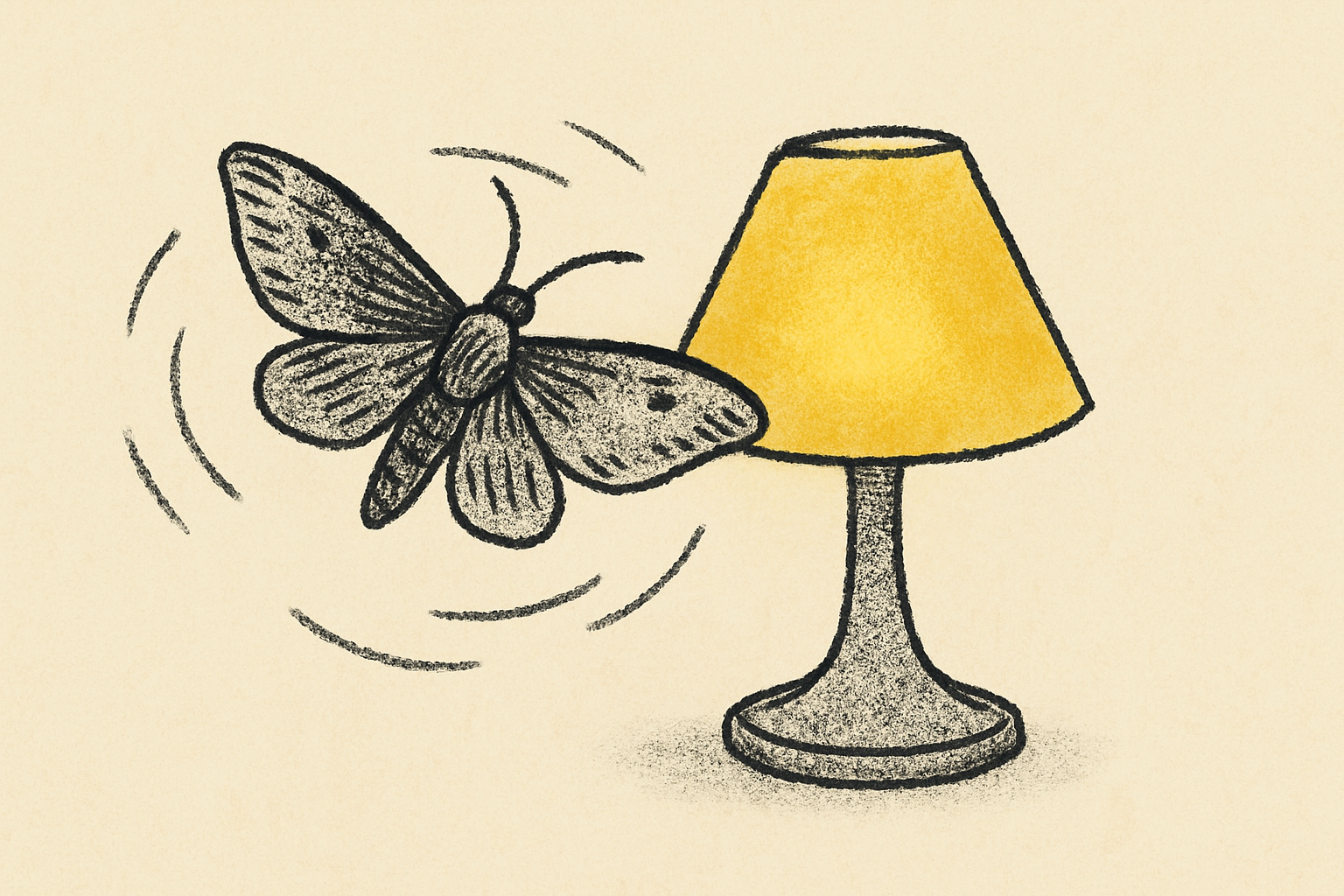
The reason limerence intensifies under uncertainty is not mysterious. It is the same mechanism that makes slot machines compelling. Behavioral psychologists call it intermittent reinforcement, and it is the most powerful schedule of reward known.
If a partner is consistently warm and available, the attachment system bonds calmly and limerence rarely takes hold. If a partner is consistently cold and unavailable, the limerent system eventually gives up. The danger zone is in the middle, where the partner is sometimes warm and sometimes withdrawn, sometimes responsive and sometimes silent. The mind cannot predict which signal is next, so it monitors them constantly. Monitoring becomes obsession.
This is why limerence tends to spike during the worst parts of a relationship rather than the best, and why it can survive a breakup essentially intact. The breakup is the final, ultimate uncertainty. Will they come back? Are they thinking about you right now? Did the last interaction mean what you think it meant? The system stays on, because the answer keeps not arriving.
Idealization and the limerent fantasy
A specific feature of limerence is the recurring fantasy scene, which Tennov called the "limerent reverie." It is usually a scene of mutual surrender — the moment they realize they love you, the apology that lands, the cinematic embrace, the words you have been waiting to hear. Limerent minds return to this scene compulsively.
The idealization works in service of the reverie. If your mind held them in full focus, with their actual flaws, the reverie would not hold up. So the mind sands the flaws off. The annoying habit becomes endearing. The cruel comment becomes a misunderstanding. The pattern of unavailability becomes a depth you saw in them that others missed.
This is not a moral failing. It is the system doing its job. The job is to keep you reaching for the object. Idealization is the engine that keeps the reaching going.
A scenario you will recognize
It has been four months since the breakup. By every objective measure, you are doing better. You sleep. You eat. You went on two dates with someone perfectly nice. You laughed at things.
Then on a random Wednesday afternoon, between meetings, you find yourself replaying a conversation from eighteen months ago. A specific look they gave you. You feel the chest ache. You wonder if they think about that conversation. You imagine an interaction where they tell you they have been thinking about it too. You realize you have been staring at your laptop for six minutes.
The intrusive thoughts are not random. They are a system that is still running. The person you went on two dates with did not register because limerence narrows the field of romantic attention to one. You did not feel anything for them not because they were boring, but because your bonding circuitry is still pointed at your ex.
This is what limerence after a breakup looks like. Not constant agony. Patches of normal life with intrusive episodes punching through.

How long limerence lasts
Tennov estimated, based on her interview data, that limerence in a fully unresolved state typically lasts from eighteen months to three years before it begins to fade on its own. That number is from interview reports, not controlled measurement, and individuals vary widely. Some people resolve in months. Some carry low-grade limerence for years.
What seems to shorten the duration:
- Sustained no contact, with no ambiguous signals to feed the system
- Real grieving of the loss as opposed to maintained hope of reconciliation
- New attachment, but only after the limerent intensity has dropped
- Time itself, but only when not undone by contact
What seems to lengthen it:
- Intermittent contact, including birthday texts, social media checking, and "just checking in"
- Reciprocal limerence on the other person's part, which is rare
- Stalking the limerent object's online life
- Anniversaries and reminder objects kept in regular view
- Substance use, which seems to refresh the salience of the obsession
How no contact specifically helps
Most breakup advice mentions no contact. For limerence, it is not optional and it works differently than people think.
The conventional reading is that no contact gives you "time to heal." That is true but incomplete. The specific mechanism by which no contact resolves limerence is that it removes the intermittent reinforcement schedule. Without new signals from the person, the obsession runs out of inputs. The mind keeps reaching, finds nothing, keeps reaching, finds nothing, and eventually the reaching becomes weaker. The fantasy reverie still happens but the chest ache loses some of its sharpness. Then more. Then more.
This is why a single text from them at month five can reset months of progress. The system is not weak. It is just specifically vulnerable to the input it has been deprived of. A single signal feeds it for weeks. The work of no contact is to deny the system the input long enough for the underlying neural priority on the person to decay.
A few things that make no contact for limerence specifically harder:
- The fantasy scenes do not require contact to keep running. You can re-fuel limerence with your own imagination for a while, although this also decays without external input.
- Memorialized objects matter more than for normal grief. The shirt of theirs, the playlist, the camera roll. These act as low-grade input that keeps the system pinging.
- Social media is poison. Even a single profile check delivers a hit. The standard advice is to block, not mute, and to do it on every platform.
Ride-out tactics
These are the tactics that practitioners who work with people in limerence states tend to recommend.
- Name the state. Tell yourself this is limerence, not love, not fate, not destiny. Naming is regulation.
- No contact, by structure, not by willpower. Block, delete, remove triggers from your environment. Willpower fails. Structure does not.
- Sit with the intrusive thought without fueling it. When the reverie starts, do not push it away (suppression often intensifies). Notice it, let it run for a moment, return to what you were doing.
- Defang the idealization on purpose. Write down five specific things about them that were genuinely incompatible with you. Re-read this list when the idealization fires.
- Wait out the early new-person desert. For the first six months of limerence resolution, new people will feel flat. This is the system narrowing your romantic attention to one person. It loosens.
- Body work. The chest ache responds to the same regulation tools that work for anxious attachment. Long exhales, cold water, walks outside, strength training.
A note on when this is something more
Limerence is uncomfortable but not pathological. There is a related condition called obsessive love disorder that pop psychology sometimes invokes; it is not a formal DSM diagnosis. If your intrusive thoughts include intent to surveil, contact, or harm the person, or if you are not eating or sleeping for sustained periods, or if you are using substances to manage the intrusive thoughts, this is past limerence and into a clinical situation. Talk to a doctor or therapist. Therapists trained in OCD modalities, particularly exposure and response prevention, sometimes work effectively with severe limerent states, because the underlying intrusive-thought pattern shares features with OCD.
Where Chaz fits
If you are trying to ride out limerence and the hardest part is keeping the input out of your system, Chaz is a free iPhone app built for exactly that problem. Streak counter to make the no-contact commitment visible, a voice agent for the moments when the intrusive thoughts spike, and a journal for the work of naming the state instead of feeding it. It is not a cure for limerence. It is one fewer reason to open their thread at 11pm. That is enough.
What comes after
The strange thing about limerence resolution is that you do not usually notice the end. You realize at some point that you went a whole day without the intrusive thoughts. Then a week. Then you see their name and something in your chest does not move the way it used to. You are not over them in the cinematic sense. The neural priority just lowered. They became a person who used to matter to you, instead of the person who organizes your inner life.
This is the goal. Not to stop loving them, exactly, and not to hate them, which is a sneaky form of staying attached. To let the priority on them in your nervous system fall back to baseline, where new people, new attention, new attachment can finally land. Limerence ends. The version of you on the other side is freer than you can currently imagine, because right now your imagination is still full of one person. That changes.