On The Mend · Attachment
What's Your Attachment Style? (A Post-Breakup Self-Check)

Your attachment style is easier to see right after a breakup than at almost any other time, because everything is louder. The way you handle the first weeks of separation reveals patterns that are usually disguised by routine. This self-check is not a formal quiz and it will not score itself with a precise number. It is ten honest scenarios. Read each one, notice which version of the response sounds most like you, and pay attention to what keeps coming up. By the end, you will have a much clearer sense of where you sit, and a starting point for what to do about it.
A quick orientation
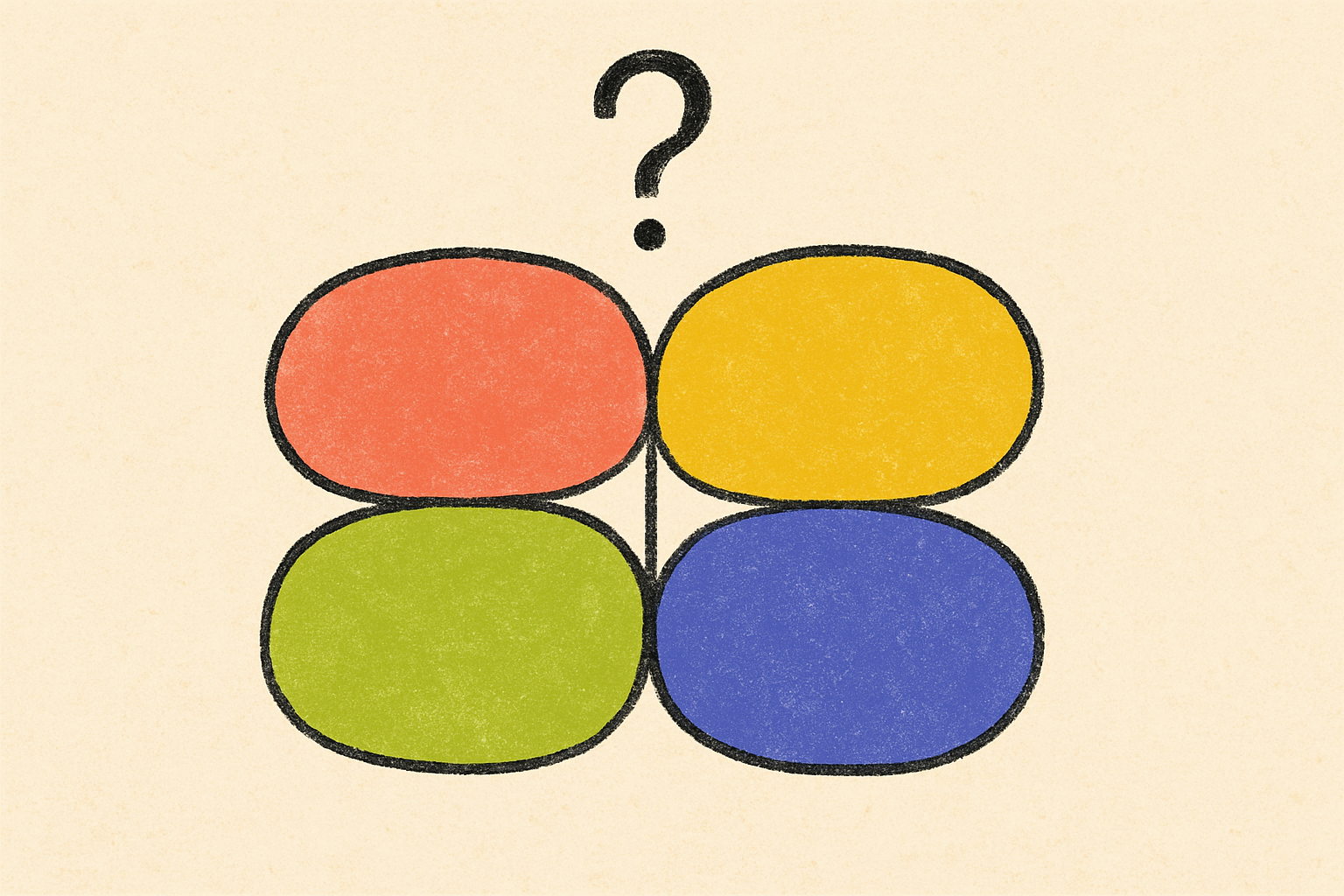
The model used here is the standard four-style framework from adult attachment research. John Bowlby laid the theoretical foundation in the mid-twentieth century. Mary Ainsworth's Strange Situation studies in the 1970s identified the original infant patterns. Cindy Hazan and Phillip Shaver extended the framework to adult romantic relationships in 1987. Kim Bartholomew and Leonard Horowitz refined the adult model in 1991 into the four-style version most people now use: secure, anxious (preoccupied), avoidant (dismissing), and disorganized (fearful avoidant).
If you want a formal, validated measure, the gold standard is the Experiences in Close Relationships scale, revised version, known as the ECR-R. It is freely available online, takes about ten minutes, and gives you two scores: one for attachment anxiety and one for attachment avoidance. Where you land on those two axes maps to one of the four styles. This self-check is faster and uses post-breakup behavior as the lens, which tends to be revealing in a way questionnaires sometimes are not.
How to use this
For each of the ten scenarios below, read the four responses. Notice which one feels most like you, even if it is the one you wish were not you. There is no scoring system. By scenario five or six, a pattern will usually emerge. By scenario ten, you will know.
The four codes used below are:
- A for anxious
- D for avoidant (dismissing)
- F for fearful avoidant (disorganized)
- S for secure

The ten scenarios
1. It is day three after the breakup. Your phone is in front of you.
- A. You have already drafted four messages. You are deciding which one to send.
- D. You blocked them on day one and you have not thought about it since.
- F. You have drafted two messages, deleted them, considered blocking, then unblocked. It is 11pm.
- S. You feel sad. You are not planning to text. You called a friend instead.
2. They text you "hey, can we talk?" at 9pm on a Tuesday.
- A. Your heart races. You respond within four minutes.
- D. You leave it on read for two days. You will deal with it when you are ready.
- F. You feel a surge of hope, then a surge of dread. You do not respond for hours and then write something long.
- S. You read it, take a breath, decide whether you want to talk, and respond clearly.
3. Two weeks in. How are you sleeping?
- A. Badly. You wake up at 3am and check their Instagram.
- D. Fine, mostly. You have been going hard at the gym.
- F. Inconsistent. Some nights great, some nights you stare at the ceiling.
- S. Worse than usual, but improving.
4. A friend asks how you are doing.
- A. You talk about your ex for forty minutes. You realize after that you did not ask them anything.
- D. You say "I am good, honestly." You change the subject.
- F. You say "fine" and then a glass of wine in, you cry.
- S. You say "honestly, kind of rough, but I am okay." You actually mean it.
5. You see their car parked outside a coffee shop you both used to go to.
- A. You walk by twice "to be sure" and then sit in your car deciding whether to go in.
- D. You change the route immediately. You feel annoyed they have ruined your coffee place.
- F. You stop in the middle of the sidewalk. You consider going in. You consider running. You do neither, you just stand there.
- S. You feel a pang. You keep walking.
6. It has been six weeks. How do you feel about the relationship now?
- A. Better than you remember. You miss them. You wonder if you overreacted.
- D. Mostly fine. Maybe a little flat. You are surprised by how little you think about them, then you find yourself remembering small things.
- F. Completely different from week to week. Some weeks you idealize them, some weeks you remember why you left.
- S. Sad about what was good, clear about what was not.
7. You match with someone new on a dating app.
- A. Within three messages you are checking whether they have an anxious vibe. You hope they reply fast.
- D. You match, you do not message, you forget. You match again next week with someone else.
- F. You feel hopeful, you feel suffocated, you ghost them before you have actually said anything.
- S. You message them. If it goes nowhere it goes nowhere.
8. Your ex starts dating someone new and you find out.
- A. You investigate the new person for two hours. You barely eat that day.
- D. You feel a flash of something and then you bury it. You go to the gym.
- F. You feel rage, sadness, vindication, and longing in rapid succession. You consider reaching out to the new person.
- S. You feel hurt, you let it pass, you do not investigate.
9. Three months in. Someone asks if you would consider getting back together.
- A. Instantly yes, with a list of conditions.
- D. Probably not. You have moved on.
- F. It depends on the day you are asked. Yesterday yes, today no.
- S. You think about it for a moment and then say "I do not think so."
10. You catch yourself thinking about them on a Saturday afternoon.
- A. You spiral for two hours. You feel like everything you have built since the breakup just collapsed.
- D. You note it and you go back to whatever you were doing.
- F. You feel ambushed. You are not sure if the longing is real or a trick.
- S. You feel a little sad. You let it pass. You go on with your day.
Reading your results
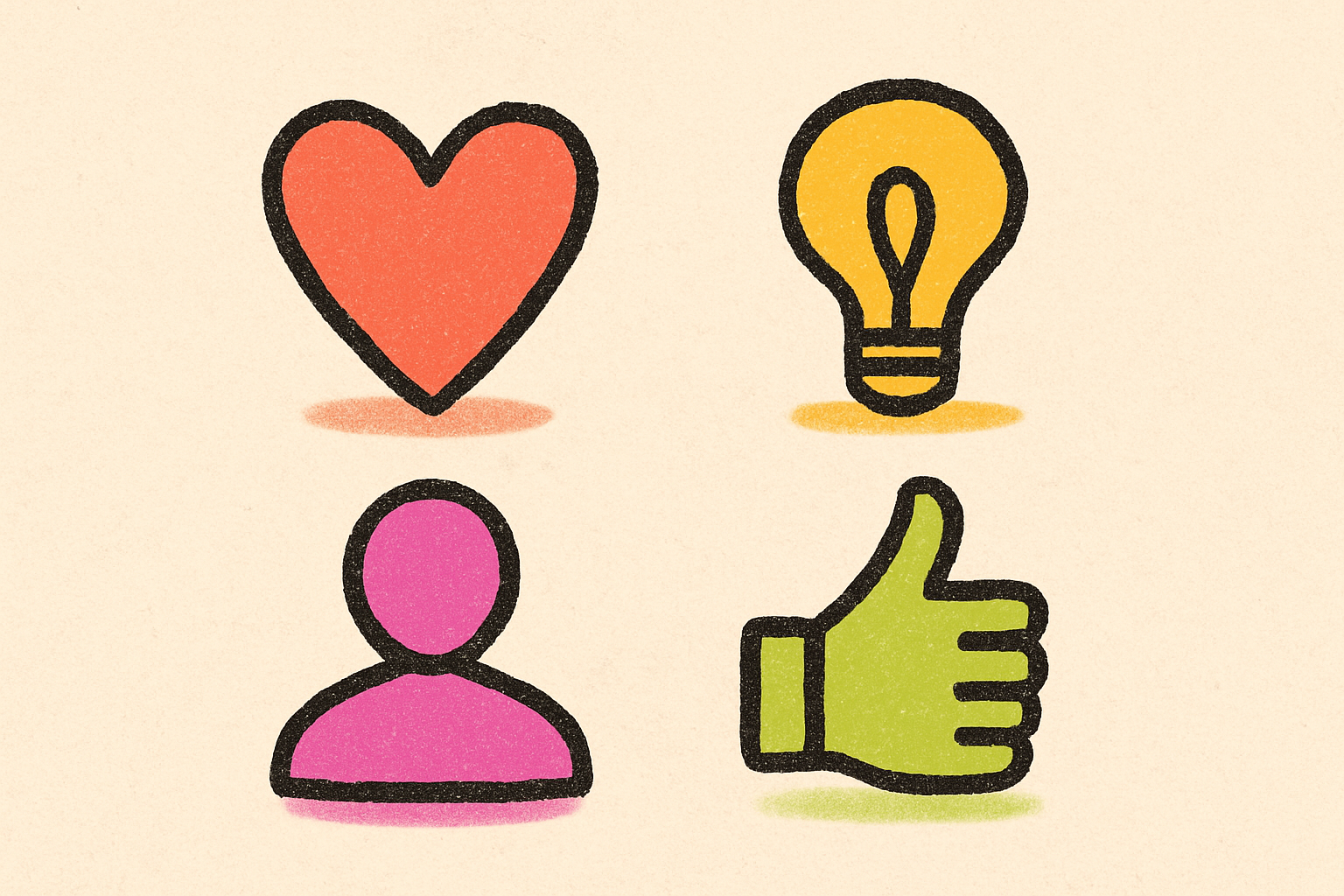
If most of your answers were A, you are likely anxious. The pursuing, the spiraling, the difficulty regulating around their availability — that is the hyperactivation pattern.
If most of your answers were D, you are likely dismissive avoidant. The relief, the suppression, the productivity surge — that is the deactivation pattern.
If most of your answers were F, you are likely fearful avoidant or disorganized. The whiplash between pursuit and avoidance, the week-to-week shifts, the contradictory impulses in the same moment — that is the disorganized pattern.
If most of your answers were S, you are likely securely attached or earned secure. The fact that you are reading a breakup blog post does not disqualify you. Secure people also grieve. They just do it in a more linear shape.
If you have a roughly even split between two codes, you are probably between styles, which is the norm rather than the exception. The most common mixes are anxious-fearful and dismissive-fearful. Trust the most uncomfortable answer; the one you wish were not yours is usually the most accurate.
What to do about it: anxious
The work for anxious attachment after a breakup is nervous-system regulation and breaking the protest cycle.
- Architect the environment so contact is not one tap away. Delete threads, block, rename the contact.
- Build a 48-hour rule between impulse and action.
- Long exhales, morning light, protein, strength training. The body work matters more than the cognitive work.
- Read anxious attachment after a breakup for the full survival guide.
What to do about it: dismissive avoidant
The work for dismissive avoidant attachment is to feel the grief in doses instead of skipping it.
- Schedule ten daily minutes with no input — no phone, no podcast, no task.
- Name internal states out loud, even clinically. "I am noticing relief and sadness at the same time."
- Do not rebound in the first three months. The new person will pull the old grief up sideways.
- Read avoidant attachment after a breakup for the week-six wall.
What to do about it: fearful avoidant
The work for fearful avoidant attachment is stabilization, not catharsis.
- Keep a pattern log to make the cycle visible.
- Decide stance during a neutral window, then hold it through both halves of the cycle.
- Get a therapist trained in EFT, EMDR, IFS, or somatic work. This style benefits the most from clinical support.
- Read disorganized attachment and breakups for the push-pull dynamic.
What to do about it: secure
If you came out as secure, the work is mostly to not destabilize. Grieve at the pace that is real for you. Resist the urge to feel insufficiently devastated; secure grief is not less love, it is more integration.
A side-by-side reference
| If your top code is | Your main risk in the first 90 days | The biggest single intervention |
|---|---|---|
| A (anxious) | Sending the message that restarts the loop | Environmental design — block, delete, rename |
| D (avoidant) | Skipping the grief and jumping to a rebound | Daily quiet time with no distraction |
| F (fearful) | Acting on whichever wave is currently winning | Pre-committed stance held through both halves |
| S (secure) | Treating ordinary grief as a problem to solve | Patience |
A note on movement between styles
Attachment style is not a fixed identity. It is more like a default setting that shifts in response to life events, therapy, and the company you keep. The longitudinal research on attachment, including work from Christopher Fraley and Phillip Shaver's labs, shows real movement across adulthood. People become more secure after a long, stable relationship with a secure-ish partner. They become more avoidant after repeated betrayals. They earn secure attachment after intentional work on the patterns. The post-breakup window is one of the higher-leverage moments for this kind of shift, precisely because the system is loud enough to be visible.
Where Chaz fits in
If you want to track these patterns as they change, Chaz is a free iPhone app with attachment-style tracking built in alongside the no-contact streak, journal, and voice agent. It will not score you and label you. It surfaces the patterns over weeks so the loops become visible, which is the whole game.
What to do with this
Knowing your style is useful only if you use it to choose differently in real time. The next time you feel the wave, do not just notice it — notice it and respond like the version of you who is one style more secure. Anxious, hold the text for two days. Avoidant, sit with the feeling for ten minutes. Fearful, do nothing for two weeks. Secure, keep doing what you are doing. That is how style changes. Not in insights. In small, repeated, slightly different choices.