On The Mend · Tactical
How to Do No Contact When You Work Together

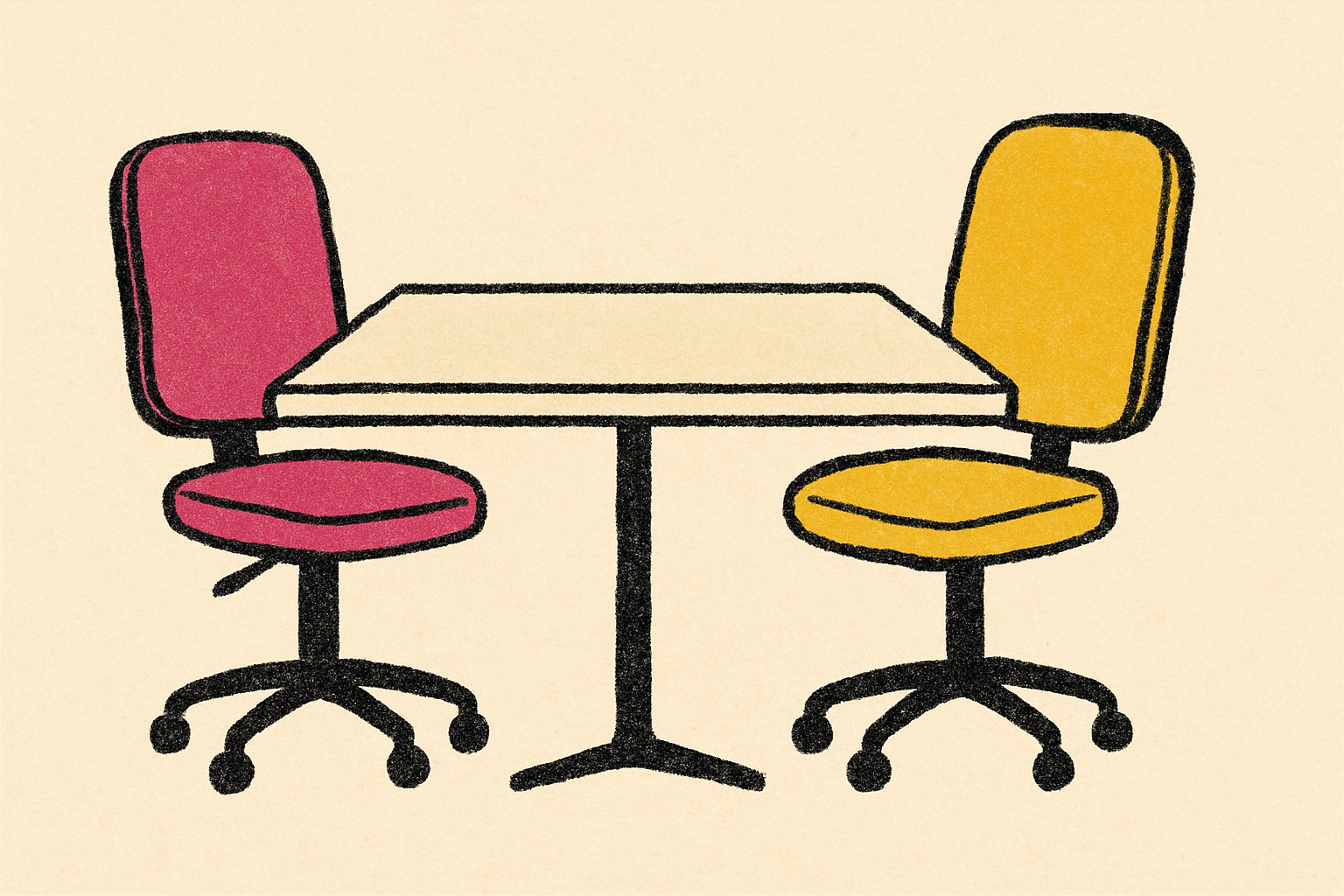
Doing no contact when you work together is the hardest version of no contact, full stop. You can't block them on Slack, you can't avoid them in the standup, and you can't disappear without torching your career. What you can do is shrink the contact to its absolute professional minimum, use grey-rocking on every non-essential interaction, and make a private plan for when (or whether) to leave the job. Here's the playbook for staying employed and sane.
The version of no contact that's possible at work
Forget "no contact." The version you're running at work is minimum-necessary contact, zero personal content.
The rules:
- Work topics only. No "how was your weekend." No casual catch-up.
- Written communication preferred over verbal. Slack, email, ticket comments — they create distance and a record.
- One-on-ones avoided when possible. If they're necessary, bring a third person.
- No social plans, no team happy hours where it's just you two, no carpooling, no eating lunch alone with them.
- No DM-ing about anything personal, even if they reach out first. Especially if they reach out first.
You're not being rude. You're being professional in the actual sense of the word: the relationship is now defined by the work, not the history.
Grey rock at work
Grey rock is a technique developed for dealing with high-conflict and narcissistic relationships. The idea: become as interesting as a grey rock. Boring. Bland. Uninteresting to engage with. They eventually look elsewhere for what they were trying to get from you.
Applied to work:
- Short responses. "Thanks." "Got it." "Will do."
- No new information about your personal life. Not what you did this weekend, not where you went on vacation, not who you're seeing.
- No emotional reactions to anything they say. Flat, neutral, professional.
- No questions about their life. Not "how was your weekend." Nothing.
- No remembering personal stuff. Their birthday is just another Tuesday now.
This isn't passive-aggression. Passive-aggression has heat. Grey rock has no heat. It's room temperature. They can't get a rise out of you because there's nothing to push against. The mechanism overlaps with what emotion-regulation researchers call antecedent-focused reappraisal — changing the meaning of the trigger before it lands, rather than white-knuckling your reaction after.
The physical logistics
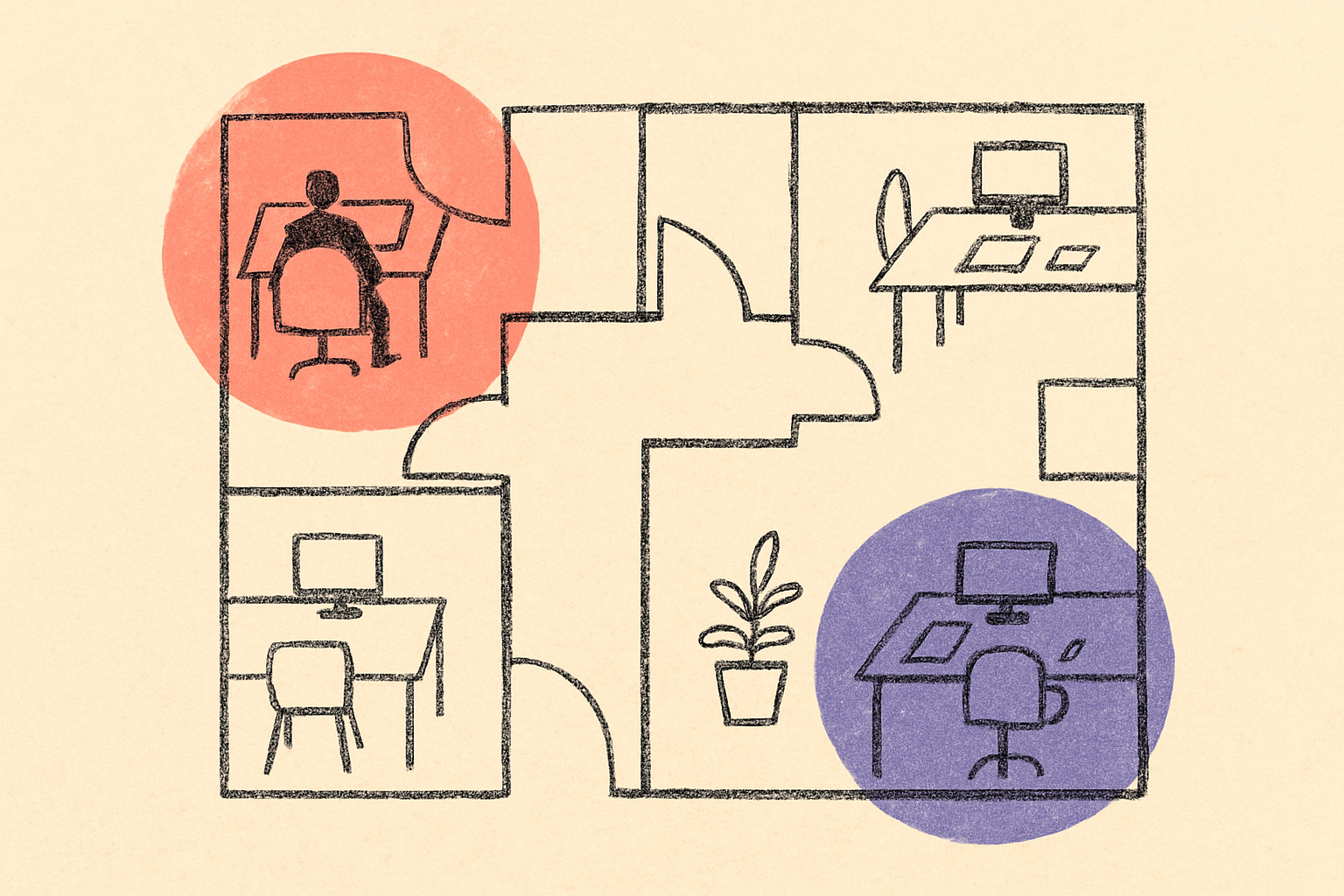
The behavioral stuff matters, but the environment matters more. Geography first.
Reroute your day
- Take a different route to your desk if it goes past theirs.
- Use a different bathroom on a different floor.
- Different coffee station, different microwave, different fridge shelf.
- Different elevator bank, or take the stairs.
- Leave for lunch at a different time. If you used to go at 12:15, go at 1:00.
- Different gym at the office, or shift your workout to before/after hours.
You are not avoiding them in a dramatic way. You are just no longer in the places they predictably are.
Restructure your meetings
- Where you have control: don't book meetings with just the two of you. Always have a third person, even if it's silly.
- Where you don't have control: arrive on time, not early. Sit across the room, not next to them. Leave on time, not late.
- For Zoom: camera off when not actively speaking, if your team norms allow. Reduces the "they're looking at me" feeling.
- Standups: prepare your update before. Deliver it. Stop talking.
Calendar them out
If you have a shared calendar, hide their availability from your default view. You don't need to see when they're in a one-on-one with your shared manager. That information will just spin you.
Slack discipline
Slack is the work equivalent of iMessage. Same problem: it's an easy slide from professional to personal.
The rules:
- All Slack with them in public channels when possible. DMs only when truly necessary.
- Mute their DM thread. You'll see new messages when you actively check, not as notifications.
- No emoji reacts to their messages. No thumbs up on their meme. No fire on their announcement. Nothing.
- Don't proactively start a DM. Always reply, never initiate, and only on work topics.
- If they send something personal — "hey, how are you" — respond once with a work pivot: "I'm okay. Did you get the brief I sent?" Then drop the personal thread.
If you have separate DM history with them from when you were together, archive or hide the conversation. You don't need to be one wrong-search away from a screenshot of a fight from six months ago.
A vivid scenario
It's Wednesday. You're in the kitchen getting coffee. They walk in.
What you used to do: small talk, awkward eye contact, maybe ask about a project, leave feeling rattled for the rest of the morning.
What you do now:
- Nod once, neutral, acknowledging their existence.
- Finish making your coffee.
- Leave at a normal pace. Not running, not lingering.
- If they say "hey, how's your week," respond: "Busy. You?" Don't wait for the answer. Walk out with your coffee.
This is not rude. This is the temperature you would use with any coworker you don't know well. The fact that you do know them well is the whole problem, and the temperature is the cure.
When to involve HR
Most people overthink this. The bar is lower than you'd assume, and HR has seen worse than your situation. (SHRM's research on workplace romance shows that the majority of people who break up with a coworker keep working with them — meaning HR has handled this exact thing many times over.)
Bring HR in when:
- They are doing anything retaliatory: cutting you out of meetings, withholding information, badmouthing you to your manager, sabotaging your projects.
- They're sending you personal messages on work platforms and won't stop after you've told them once.
- The breakup involved any kind of abuse and you have legitimate safety concerns at work.
- Your shared manager is taking sides or putting you both on the same projects against your stated preference.
Don't bring HR in for:
- It just feels awkward. (That's not their job.)
- You want HR to relay messages. (Also not their job.)
- You want to get them in trouble for the breakup. (Will backfire.)
When you do go to HR, bring documentation. Dates, times, Slack screenshots, specific incidents. Phrase it as "I want to maintain a professional working relationship and need help with these specific issues." Phrase it as workflow, not gossip. They will help you faster.
The team you can't grey-rock: shared friends
The hardest part of working together isn't them. It's the mutual friends at work who keep relaying.
"Did you hear they're dating someone in marketing?"
"They asked about you the other day."
"They seemed really upset at the offsite."
Your line, said once to each person: "Hey, I'm just trying to keep work and that separate. I love you, but I don't want updates."
Most people will take the hint. If they don't, escalate to: "I'm serious. Please don't bring them up to me." Then change the subject every time.
When to look for another job
There's no universal answer, but here are the honest indicators that you should be on LinkedIn:
- You dread Mondays specifically because of them, not the work.
- You're underperforming because the cognitive load of managing the situation is too high.
- You're being assigned to projects with them and can't get reassigned.
- They're senior to you and have influence over your career.
- You can no longer separate "I want to leave because of them" from "I want to leave because the job isn't right." When those merge, it's time.
Looking is free. You don't have to leave. But updating your resume is a form of agency, and agency is the thing the breakup stole from you. Get some of it back.
Outside of work hours
The hardest part of a coworker ex is that work hours are forced contact, but evenings are still yours. Don't let the forced contact bleed into your real no-contact.
- Block them on personal phone, email, and social outside of work hours.
- LinkedIn is a gray area — you can leave them as a connection without engaging.
- Don't check their work calendar after hours to see if they're traveling.
- Don't watch their Slack status. Don't notice when they're online late.
When you're off the clock, you're off. Yelling at an AI is a perfectly fine outlet for the workday's accumulated grey-rock energy — the Chaz app is built for exactly this.
The long view
A coworker ex is the worst-case scenario for the first 90 days. After that, it gets boring, in the good way. The grey-rock loses its difficulty because the muscle is built. You walk past their desk without your heart rate changing. You sit through a meeting where they present and you take notes without flinching.
You won't get there by trying to force yourself to "be normal." You'll get there by being relentlessly, boringly, room-temperature professional, until the new temperature is the only temperature.
Brief. Bland. Functional. Repeat until it's true.